
68 Years After Laika's Journey
Laika’s story often conjures up an innocent, childlike image of dogs dressed as astronauts, happily traveling through space to explore other planets. But Laika did not go to visit other galaxies or extraterrestrials. On November 3, 1957, the Soviet Union launched a stray dog into space aboard the Sputnik 2 spacecraft. She was picked up from the streets of Moscow and became the first living creature from Earth to orbit the planet.
With the passage of time and a historical analysis of this event, it has become clear that his apparent heroism concealed a very painful truth: there was no plan for his return, nor was there a rescue plan. The goal was to prove that a living being could survive the launch, the space environment, and weightlessness.
The first official statement claimed that Laika survived for several days before dying from a lack of oxygen. However, a few years later it was revealed that, just a few hours after launch, the spacecraft’s thermal control system failed, causing the animal’s death from overheating and stress. Sputnik 2 orbited the Earth for more than 150 days and disintegrated upon re-entry into the atmosphere.
More than six decades after that event, Laika remains a symbol of the exploitation of animals in the name of scientific progress. She marked a turning point in the history of space research, as well as in global awareness of the limits of animal experimentation. However, thousands of animals continue to be sent to the International Space Station (ISS) for various experiments coordinated by agencies from different countries.
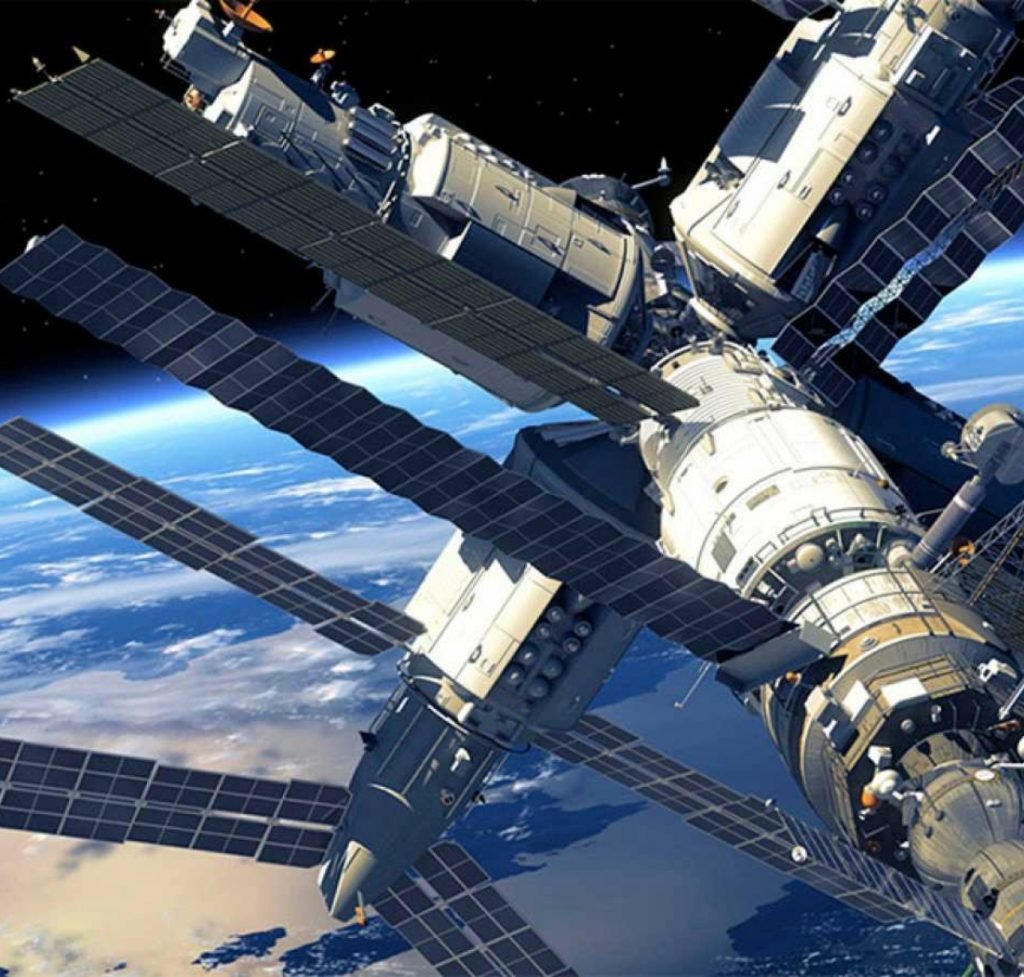
Why are there animals living on the International Space Station?
Various specialized publications detail how animal experimentation works in this field. For example, articles in which Julie Keeble, director of Biological Services at King’s College London, explains what the use of animals in space entails in order to study how to live outside Earth.
The available evidence indicates that scientists have used animals to study the effects of changes in gravity, radiation, and mechanical stress on biology, as well as on certain diseases. It has been shown that reduced gravity in space affects cardiac and brain function, causing, for example, muscle atrophy or bone loss in astronauts. In addition, the body may experience sleep disturbances, neural changes, premature aging, immune system modulation, and changes in both the microbiome and the interaction between microbes and pathogens. All of these symptoms are studied to understand equivalent conditions on Earth.
Animals in Space
In these publications, Dr. Keeble acknowledges that it is more difficult to study mammalian cells in space than on Earth, since they require highly specialized systems, do not thrive in microgravity, and suffer from being far from human care. In contrast, some microorganisms, such as bacteria, thrive in zero gravity and are not affected by floating in isolation inside a module for days. For this reason, much of space research focuses on microorganisms.
Despite this, various species have been sent into space, and many organisms have made the ISS their home. Just as on Earth, there are reasons why each species is considered suitable for different research questions:
Nematode worms: A tiny worm called Caenorhabditis elegans can be sent into space relatively easily in containers filled with culture medium, inside a box the size of a deck of cards. They reproduce every few days, mature in orbit, and produce thousands of offspring. It is described as a very cost-effective model, since space research can cost tens of thousands of dollars; the smaller the animals are and the less maintenance they require, the more practical they are. C. elegans is popular for research ranging from the study of composting in space to muscle loss.
Insects and crustaceans: Dr. Keeble herself has sent species such as bees and water fleas (Daphnia) to study pollination, stress, and reproduction in microgravity. Like worms, fruit flies can be transported in small containers, which can hold a larger number of individuals than mice. The fruit fly (Drosophila melanogaster) can be kept in plastic vials with a small amount of food. They are used to study neurodegeneration and cardiac function, and can even reproduce in orbit.
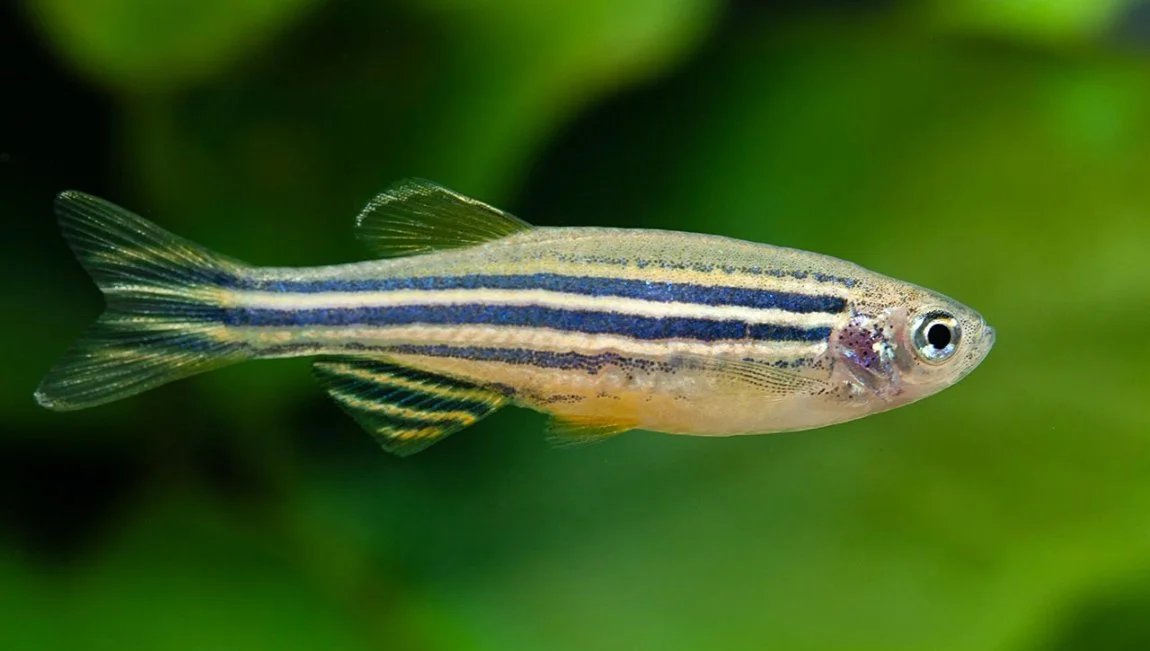
Aquatic Species: Zebrafish, medaka, and Xenopus frog embryos are housed in a special Aquatic Habitat Unit.
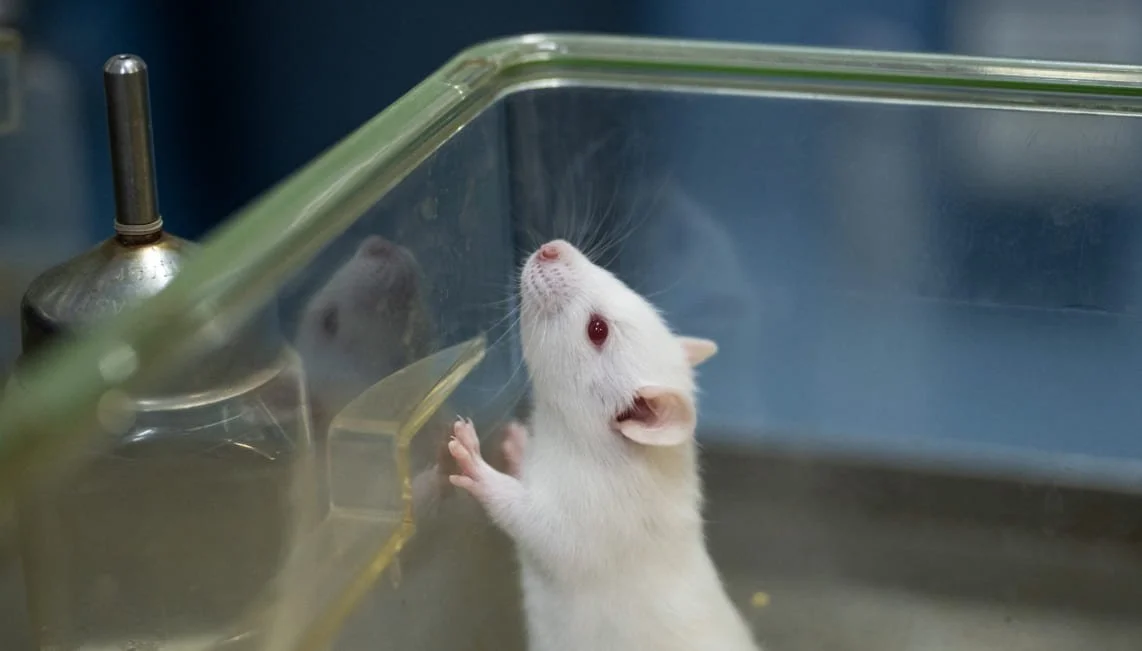
Mammals: The only mammals still sent into space are mice, which are used to study the effects of spaceflight, particularly on bone density and muscle atrophy. The ISS hosts rodent missions sponsored by pharmaceutical companies, not necessarily to test drugs in space, but to model diseases. However, due to the enormous cost of using mice, priority is given to working with smaller species.
Animal Care in Space
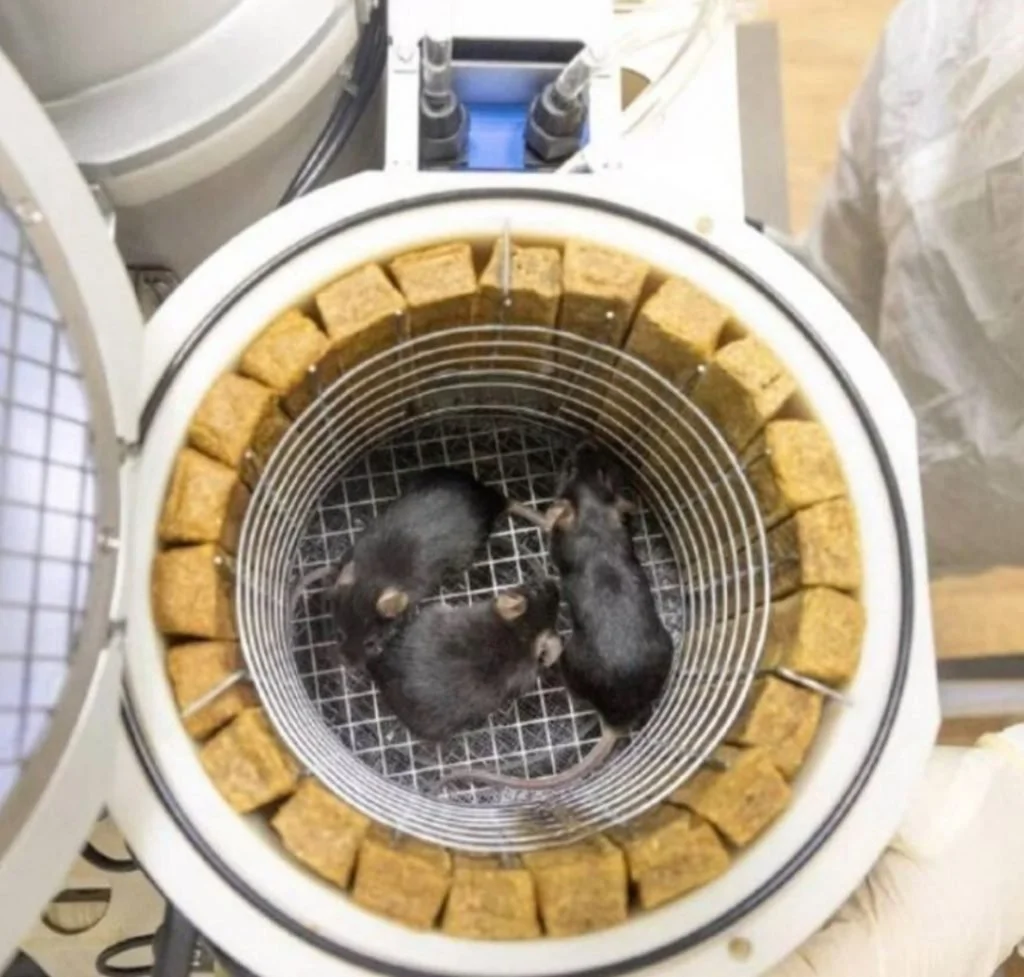
The animals undergo an acclimatization process in which they are transferred to an environment that mimics their space habitat. Since they float in microgravity, the cages are designed so that the mice can move efficiently in any direction. To prevent food and waste from floating away, the mice receive food bars in containment systems (cassettes that astronauts replace every two or three days) and drink water from pouches. An energy-efficient fan extracts and stores the waste. The cages include shelters secured to the floor so the mice can hide and nest safely, and a video system monitors them constantly. Generally, they adapt quickly to microgravity without showing significant behavioral changes, although they may groom themselves more frequently, similar to when they are moved to a new environment on Earth.
Every detail is monitored by experienced caregivers. Before embarking on missions involving animal research, all astronauts receive training and certification in handling animals. “Mice take priority on the space station. Every effort is made to ensure they spend as little time as possible in the rocket and are kept in the best possible conditions. We have to take every contingency plan into account, even one that involves a mouse escaping on board,” says Dr. Keeble.
While space experiments have contributed to our understanding of biological processes in microgravity, modern scientific ethics demand more than just results. Current evidence shows that the physiological and molecular responses of other species cannot necessarily be extrapolated to humans, due to fundamental differences in gene expression, immune regulation, and microbiome composition. Furthermore, the space environment induces uncontrollable epigenetic and stress-related changes, which reduce the experimental validity of these models.
Today, science offers advanced animal-free alternatives, such as human organoids, organs-on-a-chip, and computer simulations of microgravity, which allow us to explore the limits of life beyond Earth without repeating the moral costs of the past. Learn about scientific advances in Latin America on Te Protejo’s Map of Alternative Laboratories.
This content was adapted from the original article and translated by Gaby Aviña.