
History of the guinea pig: also known as the "conejillo de Indias"
On International Guinea Pig Day, we invite you to reflect on their role in ancient cultures and in modern science as sentient beings.
The guinea pig, scientifically known as Cavia porcellus, is a rodent native to South America. Although it is no longer found in the wild, it is believed to be descended from species such as Cavia aperea, Cavia fulgida, and Cavia tschudii, which still inhabit various regions of South America. These animals were first described by the Swiss naturalist Conrad von Gesner in 1554. Depending on the country, they are known as cuy, cuyi, cuye, cuyo, jaka, cobayo, Guinea pig, or conejillo de Indias.
In terms of their social behavior, guinea pigs are gregarious animals that live in small groups, usually consisting of several females, one male, and their young. Although they do not build burrows, they often take shelter in the burrows of other animals or in natural crevices. They are crepuscular, meaning they are most active at dawn and dusk, a behavior that helps them avoid attacks by predators.
It is estimated that the guinea pig was domesticated approximately 8,000 years ago in the central Andes. Archaeological evidence, such as various depictions found during excavations, suggests their early use in the diet and culture of Andean communities. Over time, these animals became part of folk medicine and community religious ceremonies (where they were used as sacrifices), and soon became an essential component of the cuisine of Andean countries, especially Peru, Ecuador, Colombia, and Bolivia.

Image by Depositphotos
Standardization as a Test Subject
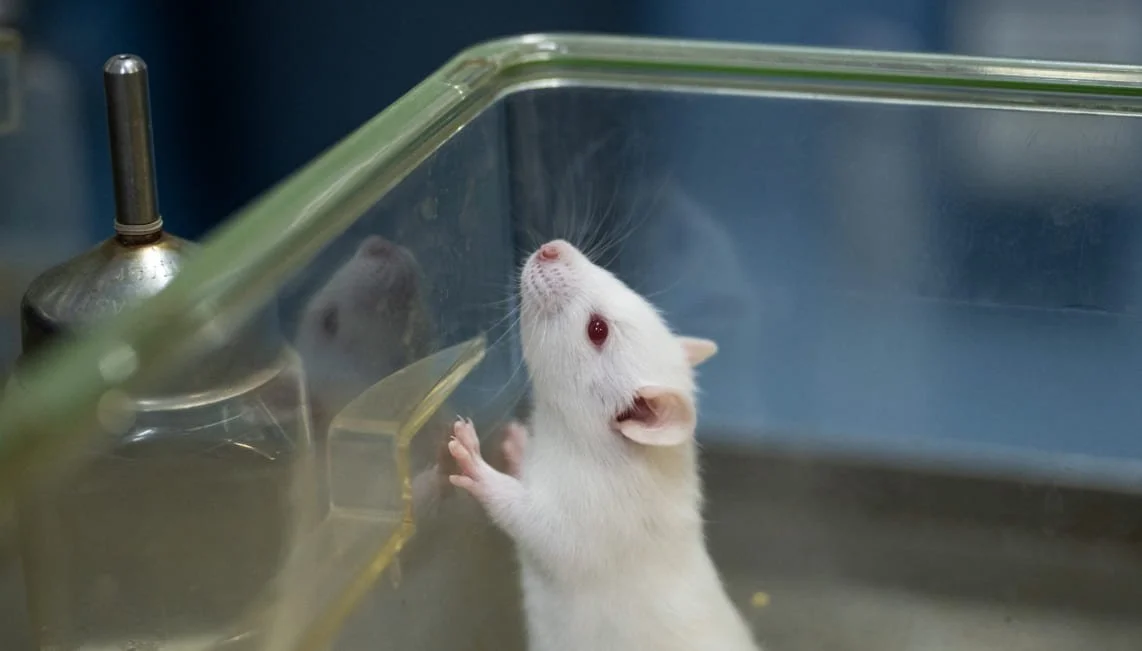
The use of guinea pigs in experimentation dates back to the 17th century. They were used so frequently as model organisms that the term “guinea pig” historically became synonymous with a test subject. This reflects a speciesist perspective that views these animals as mere tools in the service of humans, ignoring their individuality and capacity for suffering. Although they have now been largely replaced by other rodents, such as mice and rats, they are still used in biomedical research. Their physiology, vulnerability, and susceptibility to certain diseases make them highly sought after for these studies; furthermore, they are very docile animals that rarely bite or scratch, which facilitates experimentation on them. Among the most common experiments are studies on infectious diseases, such as herpes, and the evaluation of the efficacy of vaccines and therapies against tuberculosis. Due to their natural susceptibility to Mycobacterium tuberculosis, they are frequently used to study the progression of this disease and the immune response. In auditory research, guinea pigs are used to study the physiology of the inner ear and associated pathologies, such as hearing loss induced by noise or ototoxic drugs. Their cochlear anatomy and auditory response are similar to those of humans, which has been used to justify the extrapolation of preclinical findings. Additionally, they are used in research on visual disorders, in which myopia is experimentally induced to investigate the mechanisms underlying the development of refractive errors and to evaluate potential treatments and therapeutic interventions.
In the field of bone diseases, they are used to study conditions such as osteoporosis, bone mineral density, microarchitecture, and response to drug treatments in a preclinical setting. Nutritional deficiencies have also been extensively studied in these animals, particularly with regard to vitamin C. Unlike other rodents, guinea pigs cannot synthesize this vitamin, so they are used to investigate the effects of this deficiency and evaluate supplementation strategies. Finally, in the field of reproduction, they have been used to investigate the effects of various substances on fertility abnormalities and embryonic development. Numerous studies have evaluated how different chemical compounds, environmental conditions, or dietary factors affect their reproductive function, providing information that is then used for risk assessment in humans.

Image by Depositphotos
Alternatives to the Use of Guinea Pigs
In the search for alternatives to the use of animals in experimentation, groups such as the Organization for Economic Cooperation and Development (OECD) and the International Committee for the Validation of Alternative Methods (ICCVAM) have developed and validated methods that replace or reduce the need for animals in laboratory testing. In this regard, in vitro models and computational systems (in silico) have been implemented to assess the safety of chemicals and cosmetics, thereby reducing reliance on animals in these tests. It is essential to reconsider the perception of guinea pigs as mere test subjects and to recognize that language influences our attitudes toward other species. By using the term “guinea pig” to describe any individual subjected to testing, we perpetuate a mindset that justifies animal exploitation. For this reason, new, less specialized terms have been proposed—such as “test tubes” or “Petri dishes”—to refer to test models, which gradually foster respect for these species that have been exploited for so long.
Questioning and changing these types of terms is a step toward greater awareness and respect for animal rights, promoting a more ethical and equitable relationship between humans and other species. These rodents exhibit complex social behaviors and have been an integral part of various cultures throughout history, fulfilling their role in the ecosystem just like all living beings. Promoting a perspective that values their well-being and seeks ethical alternatives in scientific research will lead to more responsible and compassionate practices. In countries like Peru, thousands of guinea pigs are still subjected to painful and unnecessary tests for cosmetics. ¡Sign the petition at this link and help us put an end to cosmetic testing on animals in Peru!
Bibliography
Blount, J. (1904). The Associative Processes of the Guinea Pig. Google Books; University of Chicago. https://books.google.cl/books?id=dWcKAAAAMAAJ&pg=RA2-PA300&lpg=RA2-PA300&dq=guinea+pigs&redir_esc=y&hl=en#PRA1-PA299
Coker, S. J., Dyson, R. M., Smith-Díaz, C. C., Vissers, M. C. M., & Berry, M. J. (2023). Effects of Low Vitamin C Intake on Fertility Parameters and Pregnancy Outcomes in Guinea Pigs. Nutrients, 15(19), 4107. https://doi.org/10.3390/nu15194107
Hook, L. M., Friedman, H. M., & Awasthi, S. (2021). Guinea Pig and Mouse Models for Genital Herpes Infection. Current Protocols, 1(12), e332. https://doi.org/10.1002/cpz1.332
Janine, L. (October 31, 2007). The Reality and Prospects of Guinea Pig Farming in the Andean Countries. Inia.gob.pe; Latin American Association of Animal Production. https://repositorio.inia.gob.pe/items/e6b76f4e-cf52-46bb-b4c9-50fbc47dffb2
Lord, E., Collins, C., deFrance, S., LeFebvre, M. J., Pigière, F., Eeckhout, P., Erauw, C., Fitzpatrick, S. M., Healy, P. F., Martínez-Polanco, M. F., Garcia, J. L., Ramos Roca, E., Delgado, M., Sánchez Urriago, A., Peña Léon, G. A., Toyne, J. M., Dahlstedt, A., Moore, K. M., Laguer Diaz, C., & Zori, C. (2020b). Ancient DNA of Guinea Pigs (Cavia spp.) Indicates a Probable New Center of Domestication and Pathways of Global Distribution. Scientific Reports, 10(1), 8901. https://doi.org/10.1038/s41598-020-65784-6
Morales, E. (2025). The Guinea Pig: Healing, Food, and Ritual in the Andes | WorldCat.org. Worldcat.org. https://search.worldcat.org/title/31970310
Naert, G., Pasdelou, M. P., & Le Prell, C. G. (2019). Use of the guinea pig in studies on the development and prevention of acquired sensorineural hearing loss, with an emphasis on noise. The Journal of the Acoustical Society of America, 146(5), 3743. https://doi.org/10.1121/1.5132711
Orme, I. M., & Ordway, D. J. (2016). Mouse and Guinea Pig Models of Tuberculosis. Microbiology Spectrum, 4(4), 10.1128/microbiolspec.TBTB2-0002-2015. https://doi.org/10.1128/microbiolspec.TBTB2-0002-2015
Skovsted, G. F., Skat-Rørdam, J., Frøkiær, A. P., Jensen, H. E., Tveden-Nyborg, P., & Lykkesfeldt, J. (2022). Vitamin C Deficiency Exacerbates Dysfunction of Atherosclerotic Coronary Arteries in Guinea Pigs Fed a High-Fat Diet. Antioxidants (Basel, Switzerland), 11(11), 2226. https://doi.org/10.3390/antiox11112226
Taylor, D. K., & Lee, V. K. (January 1, 2012). Chapter 25 - Guinea Pigs as Experimental Models (M. A. Suckow, K. A. Stevens, & R. P. Wilson, Eds.). ScienceDirect; Academic Press. https://www.sciencedirect.com/science/article/abs/pii/B9780123809209000250
University of Otago. (June 16, 2020). Origins of the beloved guinea pig. Retrieved January 29, 2025, from www.sciencedaily.com/releases/2020/06/200616100818.htm
Vecchio, R. (2004). Peru Pushes Guinea Pigs as Food. cbsnews.com. https://www.cbsnews.com/news/peru-pushes-guinea-pigs-as-food/
Veronesi, F., Salamanna, F., Martini, L., & Fini, M. (2022). Naturally Occurring Osteoarthritis Features and Treatments: A Systematic Review Using the Aged Guinea Pig Model. International Journal of Molecular Sciences, 23(13), 7309. https://doi.org/10.3390/ijms23137309
Zhang, Y., Tang, W., Liang, J., Zhou, X., Chen, S., & Zhi, Z. (2023). Spontaneously Myopic Guinea Pig: Model of Early Pathologic Myopia. Investigative Ophthalmology & Visual Science, 64(14), 19. https://doi.org/10.1167/iovs.64.14.19