
AI in Animal Experimentation: Scientific Breakthrough or Ethical Trap?
Continuous monitoring systems offer a promising glimpse into how AI can transform data collection in animal experimentation. The challenge lies in ensuring that it does not perpetuate the use of animals and in steering it toward their ultimate replacement.
Recent advances in laboratory animal welfare standards have been presented as an ethical triumph within the field of experimentation. This may be because refinement is often the “path of least resistance” in research facilities. Refinement is one of the principles of the 3Rs (Replacement, Reduction, and Refinement) —which have been the cornerstone of animal experimentation ethics—seeks to minimize the suffering of animals used in research.
Changing the way a mouse is handled—such as by not holding it by the tail—improving the quality of its food, or installing racks with better ventilation and control systems are relatively simple measures that effectively reduce the animals’ immediate suffering. However, these changes can give the impression that ethical criticisms have been addressed and reinforce the legitimacy of the model rather than seeking to replace it.
This means that the more that is invested in housing techniques, analgesia, or monitoring, the less urgent the need to find alternative methods appears, because it reduces social criticism and unease within the scientific community itself. It is important to remember that the basis of refinement lies in reducing stress or distress in laboratory animals, as well as ensuring their well-being and environmental enrichment, and not in justifying their continued use through the pursuit of these objectives.

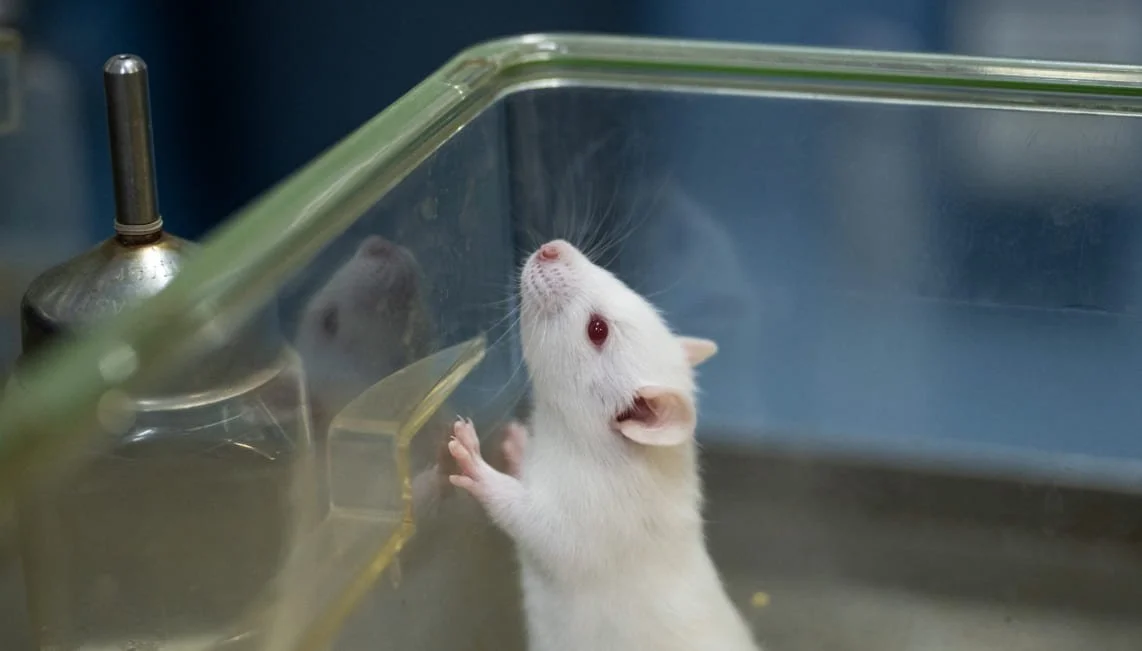
Image by Depositphotos
AI as a Tool for Scientific Progress
Recently, the use of artificial intelligence (AI) in housing and monitoring techniques has been incorporated into the range of refinement methods, improving the observation of behavior and early warning signs in rodent groups while reducing human handling during sampling for physiological assessments. AI offers greater precision, efficiency, and data.
The shift in how behavioral and physiological data are collected and interpreted in laboratory rodents—by integrating automated continuous monitoring with real-time analysis of large volumes of data—represents a significant improvement over manual, piecemeal methods that are subject to human bias. Tools can be implemented that generate pattern-based readings, identify subtle changes in the animals’ routines, and optimize the efficiency of behavioral assessment scales—such as the Grimace Scale—which ultimately reduces stress levels. With technologies like Home Cage AI, we could accelerate our understanding of diseases, enable more precise interventions, and reduce research time and costs.
Although Grimace scales represent a significant advance in the noninvasive assessment of pain in rodents and other species, they have limitations that prevent them from being considered an ideal tool. If data from such a scale are not correctly incorporated into the foundations of artificial intelligence, the interpretation of facial expressions may be affected by individual variability or by differences between strains or species. Furthermore, these scales focus on acute pain and may be less sensitive in detecting chronic or low-grade pain, where facial cues are more subtle or masked by adaptive mechanisms. Relying exclusively on these scales may obscure other dimensions of well-being; therefore, these dimensions must be incorporated into AI models.
On the other hand, there are certain factors that could undermine this improvement. One of them is that the initial programming of any artificial intelligence tool is based on the information provided by humans, which creates an initial bias that the AI will rely on to interpret an animal signal as significant or negligible. If objective information that has undergone rigorous review by professionals (such as veterinarians, animal facility technicians, or biologists specializing in laboratory animals) is included, human bias in the interpretation of important behavioral signals in animals could be reduced. Otherwise, the risk of including insufficient or even incorrect information in the databases is very high. The use of these intelligent systems may also pave the way for the expanded use of animals in more complex or longer-term experiments, now that they can be observed more closely and for longer periods of time. Institutions that adopt these types of systems do so primarily to optimize the use of animals; in fact, one of the most frequently cited benefits is that more data can be obtained from each animal, which should reduce the total number of animals used at each stage of the experiment. However, it is possible that more experiments will be conducted (with more variables, comparisons, and longitudinal studies), thereby expanding their scope. For this reason, it is important to implement policies that prevent their unnecessary use. In the case of animal experimentation, the goal must be to move beyond it. Any technological initiative applied to this field must be evaluated based on its contribution to replacing this model.
It is true that science must advance, but not at any cost or in any direction. Advances in animal welfare cannot be used to justify its continued use. AI can be a key tool to accelerate the transition toward alternative models free from animal suffering, but only if it is used with critical awareness and clear regulation.
Discover laboratories that do not use animals in our Map of Alternative Laboratories in Latin America.
Bibliography:
Critser, R., & Locke, P. (2024). How should the 3 R’s be revised and why? AMA Journal of Ethics, 26(9), E673–E680. https://doi.org/10.1001/amajethics.2024.673
Dutton, G. (2025). Home Cage AI Monitoring. Envision, Jackson Labs. https://www.genengnews.com/topics/artificial-intelligence/home-cage-ai-monitoring/
Ernst, L., Kopaczka, M., & Tolba, R. H., et al. (2020). Improvement of the Mouse Grimace Scale setup for implementing semi-automated Mouse Grimace Scale scoring (Part 1). Laboratory Animals, 54(1), 83–91. https://doi.org/10.1177/0023677219881655
Guo, C., et al. (2024). A survey on AI-driven mouse behavior analysis. Frontiers in Neuroscience. https://pmc.ncbi.nlm.nih.gov/articles/PMC11591614/
Herrmann, K. (2019). Refinement on the Path Toward Replacement: Are We Doing What We Can? WellBeing International WBI Studies Repository. https://www.wellbeingintlstudiesrepository.org/cgi/viewcontent.cgi?article=1001&context=humsmov
Hsieh, C. M., et al. (2024). AI-powered home cage system for real-time tracking and behavioral monitoring of rodents. Cell Reports Methods. https://www.cell.com/iscience/fulltext/S2589-0042(24)02448-9
Kiani, A. K., Pheby, D., Henehan, G., Brown, R., Sieving, P., Sykora, P., ... & Bertelli, M. (2022). Ethical considerations regarding animal experimentation. J Prev Med Hyg, 63(2 Suppl 3), E255-E266. https://doi.org/10.15167/2421-4248/jpmh2022.63.2S3.2768
Lauwereyns, J., Bajramovic, J., Bert, B., et al. (2024). Toward a common interpretation of the 3Rs principles in animal research. Lab Anim, 53, 347–350. https://doi.org/10.1038/s41684-024-01476-2
Singer, M., & Akhtar, A. (2024). With what should we replace nonhuman animals in biomedical research protocols? AMA Journal of Ethics, 26(9), E701–E708. https://doi.org/10.1001/amajethics.2024.701