
Alternative Methods for Cosmetic Testing
Cruelty-free cosmetics have advanced thanks to the development of alternative methods, such as reconstructed human skin models and computational tools. These technologies are not only more ethical but also more accurate, and they are transforming the way product safety is assessed worldwide.
Progress toward a more responsible cosmetics industry has been closely linked to the development of scientific solutions that allow products to be evaluated without resorting to animal testing. In response to historical practices such as the Draize test, various alternative methods have emerged that replace animal testing in toxicological evaluation, particularly in the cosmetics industry.
In this new paradigm, the goal is not only to avoid cruelty but also to improve the scientific relevance of the results. Various studies have shown that these alternative methods may have greater predictive power regarding human physiology than animal models, thereby reducing errors in tests for irritation, corrosion, phototoxicity, or skin sensitization.
In this context, laboratories and scientific platforms have emerged that have adopted innovative approaches to assessing safety without resorting to animal testing. This progress has taken hold primarily in Europe and North America, and is gradually gaining ground in Latin America. Among these, reconstructed human skin models stand out, as they have made it possible to replace animals in skin and eye tests.
Examples of this include technologies such as EpiDerm™ and SkinEthic™, which are capable of highly accurately replicating the layers of the epidermis and have been validated by international organizations for the evaluation of cosmetics and chemicals. In the case of eye irritation, models such as EpiOcular™ have made it possible to replace traditional methods, providing more representative results without the use of animals.
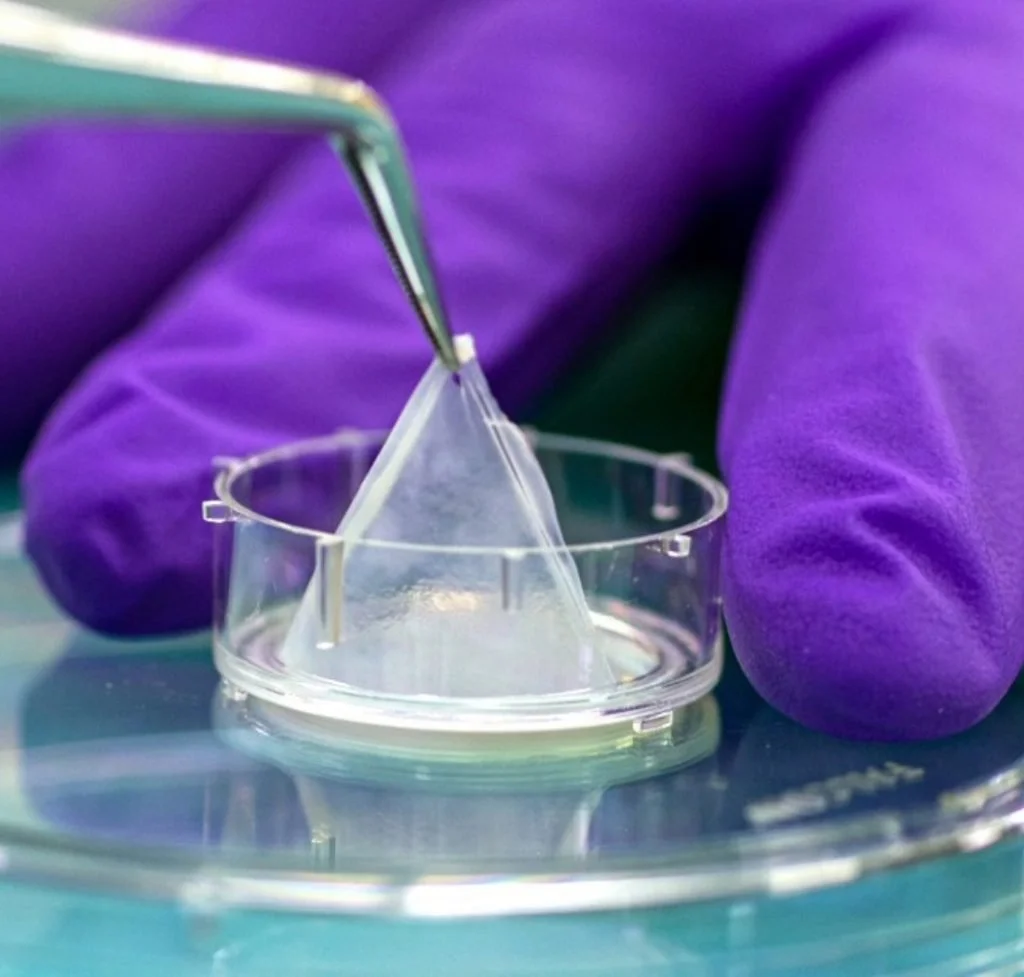
SkinEthic HCE is OECD-validated for the TG492B test method.
Alternative laboratories
Latin America has begun to make progress in adopting alternative methods, although it still faces regulatory and economic challenges. Even so, some countries have taken significant steps, and there are laboratories in the region that are already using advanced animal-free models. These include initiatives that use cell cultures, computational tools, and three-dimensional models to assess irritation, sensitization, and phototoxicity.
Internationally, various regulations have driven this transition. Countries such as India and Norway, along with the European Union, have imposed restrictions on cosmetic testing on animals, while regulatory agencies have recognized the validity of these methods for safety studies. At the same time, scientific organizations continue to develop and validate new tools applicable to cosmetics, medications, and chemicals.
Along with in vitro models, computational tools have expanded the scope of evaluation. Methods such as predictive models based on chemical structure make it possible to estimate the toxicity of thousands of compounds without the need for physical testing, thereby optimizing resources and time.
Strengthening the implementation of these methods requires not only scientific advances but also regulatory frameworks that promote their adoption. Understanding the proposals and progress in this area helps us see how to move forward toward evaluation models that do not use animals.
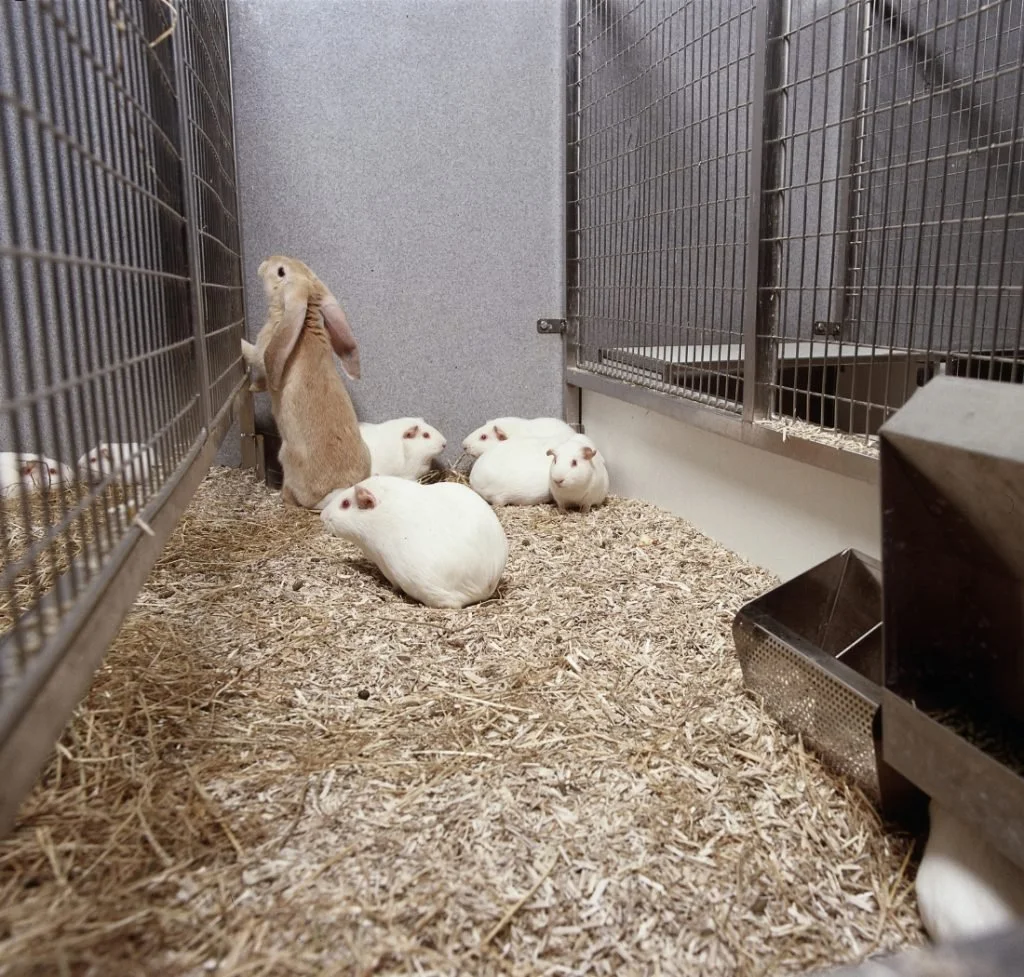
Rabbits and guinea pigs in the animal facility. Understanding Animal Research.
Bibliography.
Episkin, (2024). World leader in tissue engineering for in vitro human skin and epithelial models. Retrieved from https://www.episkin.com/
Capowski, E. E., Samimi, K., Mayerl, S. J., Phillips, M. J., Pinilla, I., Howden, S. E., Saha, J., Jansen, A. D., Edwards, K. L., Jager, L. D., Barlow, K., Valiauga, R., Erlichman, Z., Hagstrom, A., Sinha, D., Sluch, V. M., Chamling, X., Zack, D. J., Skala, M. C., & Gamm, D. M. (2019). Reproducibility and staging of 3D human retinal organoids across multiple pluripotent stem cell lines. Development (Cambridge, England), 146(1), dev171686. https://doi.org/10.1242/dev.171686
Gamm, D. (February 8, 2022). UW study finds that photoreceptor cells from retinal organoids can replicate key functions of vision. Waisman Center. https://www.waisman.wisc.edu/2022/02/08/uw-study-finds-photoreceptor-cells-from-retinal-organoids-can-replicate-key-functions-of-vision/
U.S. Food and Drug Administration. (October 1, 2024). New Approach Methods (NAMs). https://www.fda.gov/food/toxicology-research/new-approach-methods-nams
Kandárová, H., Hayden, P., Klausner, M., Kubilus, J., & Sheasgreen, J. (2009). An in vitro skin irritation test (SIT) using the EpiDerm reconstructed human epidermal (RHE) model. Journal of Visualized Experiments: JoVE, (29), 1366. https://doi.org/10.3791/1366
Bajot, F. (2010) “The Use of QSAR and Computational Methods in Drug Design.” In: Puzyn, T., Leszczynski, J., and Cronin, M. (eds.), *Recent Advances in QSAR Studies*. *Challenges and Advances in Computational Chemistry and Physics*, vol. 8. Springer, Dordrecht. https://doi.org/10.1007/978-1-4020-9783-6_9.
Bhatia, S. N., & Ingber, D. E. (2014). Microfluidic organs-on-chips. *Nature Biotechnology*, 32(8), 760–772. https://doi.org/10.1038/nbt.2989
User's Manual. (2013). Three-dimensional cultured human corneal epithelial model. Retrieved from: https://www.jpte.co.jp/en/business/LabCyte/cornea-model/documents/LabCyte_CORNEA-MODEL_Instruction_Manual_Mar2017.pdf