

History of the Draize Test
For decades, the Draize Test was one of the primary methods used in toxicology to assess the safety of chemicals and cosmetics. Although it was considered the gold standard at the time, it has since been widely questioned both for its impact on animals and for its scientific limitations.
Developed in 1944 by toxicologist John H. Draize, this test marked a milestone in animal experimentation by establishing a model for measuring eye and skin irritation. Although it has been endorsed by international organizations and used within relevant regulatory frameworks, its validity as a reliable benchmark has been the subject of debate, driving the search for and development of more ethical and accurate alternative methods.
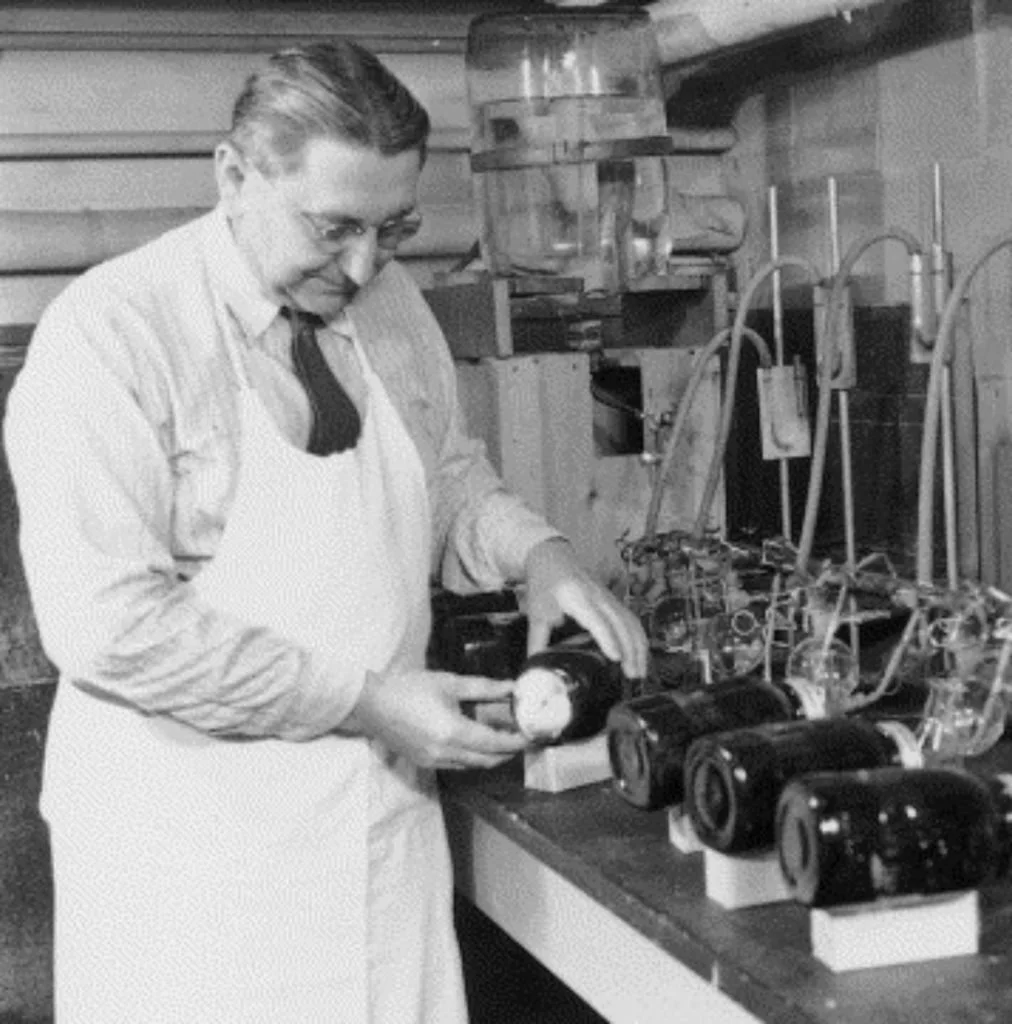
Toxicologist John H. Draize.
What is the Draize test?
This test has two main variants—the ocular and the dermal—both of which were developed using rabbits due to their ease of handling and physiological characteristics.
In the eye test, the product is applied directly to one eye, while the other serves as a control. Reactions are then observed over the course of hours, days, or even weeks, recording effects such as redness, inflammation, bleeding, and, in the most severe cases, irreversible damage that can affect vision.
In the dermal test, the substance is repeatedly applied to shaved skin, which can cause severe irritation and lesions. After the test is completed, the animals are typically subjected to tissue analysis to assess possible deeper effects.
To prevent the animals from interfering with the test, their movement is restricted, preventing them from reacting to pain or removing the substance. This situation causes high levels of stress and distress, which can also affect the validity of the results obtained.
Adverse effects such as swelling, irritation, ulceration, infection, corrosion, and even blindness are recorded by researchers, often through subjective assessments. Despite containment measures, some animals attempt to escape, which can result in serious injuries such as fractures, paralysis, or even death.
In addition, in various research settings, the use of analgesia is not considered, on the grounds that it could interfere with the results. This exposes the animals to high levels of pain throughout the entire process.

Rabbit in the Animal Facility. Understanding Animal Research.
An unnecessary and outdated method
Numerous studies have shown that data obtained through the Draize test do not always accurately predict human reactions and yield inconsistent and unreliable results—including false positives—due to various factors. Primarily because of differences in ocular and skin physiology between species, rabbits’ eyes are very different from ours. Their nerves, blood vessels, and cells are organized differently, and they lack essential parts of the human eye, such as the macula in the retina, which enables sharper and more detailed vision. Furthermore, the tear reflex and the associated tear flow are very different, as rabbits react differently to stimuli, diseases, or toxic substances that affect humans, which impacts the validity of the results.
On the other hand, test conditions may not adequately simulate exposure in real-world situations, and the observed reaction may depend on factors such as the volume of liquid applied and the contact time, which may overestimate the irritation that is subjectively reported according to the criteria of different researchers. This can lead to substances being erroneously classified as highly irritating to humans when in fact they are not.
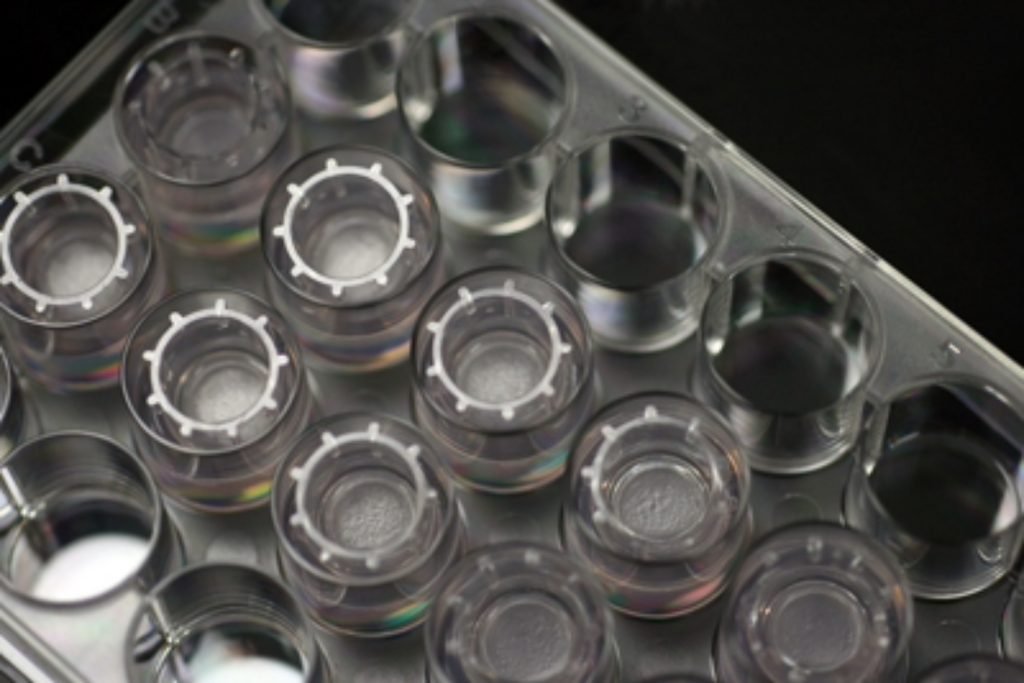
SkinEthic HCE / Corneal epithelium. L’Oréal, EpiSkin.
Advances in Alternative Methods
Science has driven the development of numerous alternative methods that allow for the evaluation of product safety in a more ethical, accurate, and efficient manner than traditional testing.
In Latin America, there are initiatives that have made progress in this area by using reconstructed human skin models that replicate biological functions under laboratory conditions. These tools, validated by international organizations, allow for the assessment of irritation, healing, and other effects on human tissue without resorting to animals, thereby lending greater scientific relevance to the results.
In addition, methods have begun to be implemented to assess eye irritation using models that replicate the corneal epithelium with human cells, making it possible to analyze toxicity without resorting to animal testing. These tools represent a significant advance, as they are able to mimic human physiological responses more accurately.
Advances in science have made it possible to replace methods such as the Draize test with approaches that are more accurate and better aligned with human biology. Understanding these new methodologies provides insight into how research is evolving toward more ethical and up-to-date practices.
Bibliography
Draize, J. H., Woodard, G., & Calvery, H. O. (1944). Methods for the study of irritation and toxicity of substances applied topically to the skin and mucous membranes. The Journal of Pharmacology and Experimental Therapeutics, 82(3), 377-390. http://jpet.aspetjournals.org/content/82/3/377.
Wilhelmus, K. R. (2001). The Draize eye test. Survey of Ophthalmology, 45(6), 493–515. https://doi.org/10.1016/s0039-6257(01)00211-9.
De Hoz, R., Salazar, J.J., Ramírez, A.I., Rojas, B., Triviño, A., & Ramírez, J.M. (2006). A comparative study of choroidal innervation in humans and rabbits (Oryctolagus cuniculus). Archives of the Spanish Society of Ophthalmology, 81(8), 463–470. Retrieved December 29, 2024, from http://scielo.isciii.es/scielo.php?script=sci_arttext&pid=S0365-66912006000800007&lng=es&tlng=es.
(2019). Test No. 492: Reconstructed Human Cornea-like Epithelium (RhCE) Test Method for Identifying Chemicals That Do Not Require Classification and Labeling for Eye Irritation or Serious Eye Damage. OECD Guidelines for the Testing of Chemicals. https://doi.org/10.1787/9789264242548-en
EpiOcular In Vitro 3D Tissues | MatTek Life Sciences. (November 28, 2015). MatTek Life Sciences. https://www.mattek.com/mattekproduct/epiocular/
Wilson, S. L., Ahearne, M., & Hopkinson, A. (2015). An overview of current techniques for ocular toxicity testing. Toxicology, 327, 32–46. https://doi.org/10.1016/j.tox.2014.11.003
Adriaens, E., Barroso, J., Eskes, C., Hoffmann, S., McNamee, P., Alépée, N., Bessou-Touya, S., De Smedt, A., De Wever, B., Pfannenbecker, U., Tailhardat, M., & Zuang, V. (2014). Retrospective analysis of the Draize test for serious eye damage/eye irritation: importance of understanding the in vivo endpoints under UN GHS/EU CLP for the development and evaluation of in vitro test methods. Archives of Toxicology, 88(3), 701–723. https://doi.org/10.1007/s00204-013-1156-8
McNamee, P., Hibatallah, J., Costabel-Farkas, M., Goebel, C., Araki, D., Dufour, E., Hewitt, N. J., Jones, P., Kirst, A., Varlet, B. L., Macfarlane, M., Marrec-Fairley, M., Rowland, J., Schellauf, F., & Scheel, J. (2009). A tiered approach to the use of alternatives to animal testing for the safety assessment of cosmetics: Eye irritation. Regulatory Toxicology and Pharmacology, 54(2), 197–209. https://doi.org/10.1016/j.yrtph.2009.04.004.