
Motherhood in Ratas: What Is It Really Like?
Motherhood across different species allows us to observe caregiving and protective behaviors that play a key role in the survival of offspring. In this context, it is important to understand how this process unfolds in rats.
Although they are often viewed as pests or used in research contexts, rats exhibit complex maternal behaviors associated with the care, protection, and development of their offspring. As in other species, females play a fundamental role in the early stages of life, a fact that has been documented in studies of their behavior.
The Maternal Instinct: Beyond a Biological Response
Under natural conditions, a female rat can have litters of 6 to 12 pups every three to four weeks, depending on factors such as diet and environment. From birth, caregiving behaviors are observed, such as grooming the pups, stimulating them to promote basic functions, and providing warmth.
During the first few days of life, the young are completely dependent on their mother for food and protection, since they are born altricial—that is, hairless, with a limited ability to regulate their body temperature, and with reduced mobility. Beginning in the third week, they start to explore their surroundings, while remaining dependent on their mother’s care and continuing to learn behaviors typical of the species.
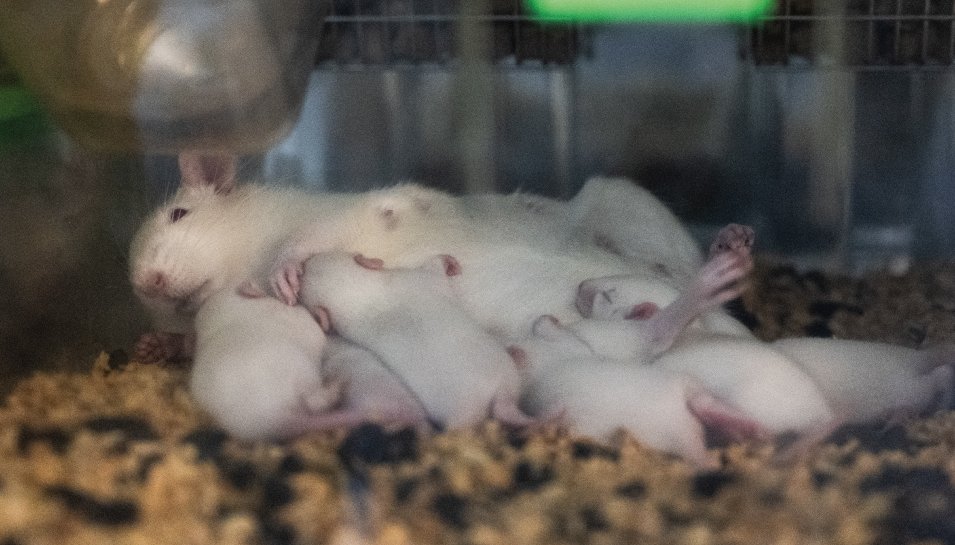
Image by We Animals & Te Protejo
These behaviors have been studied in the scientific community, revealing caregiving responses that go beyond basic functions and provide a better understanding of these animals’ behavioral capabilities. Maternal behavior in rats is not limited solely to instinctive responses; it also involves hormonal processes and epigenetic factors that influence how females respond to their offspring. Before and after giving birth, behaviors critical to survival are observed, associated with physiological changes during gestation.
Among these changes, a decrease in progesterone and an increase in estrogen toward the end of pregnancy have been described, which promote the activation of caregiving and protective behaviors, including defensive responses to potential threats. Furthermore, the experience of motherhood has been associated with changes in the brains of rats related to memory and learning processes. Some studies have observed improvements in spatial memory and in behaviors such as foraging, which have been linked to neuroplasticity processes.
It has been observed that rats that have never given birth can develop caring behaviors when continuously exposed to newborn pups, which demonstrates the plasticity of their behavior. The experience of motherhood can vary among individuals. Some research suggests that certain females, especially those with a greater predisposition to anxiety responses, may not exhibit significant changes in their stress levels despite contact with their offspring.
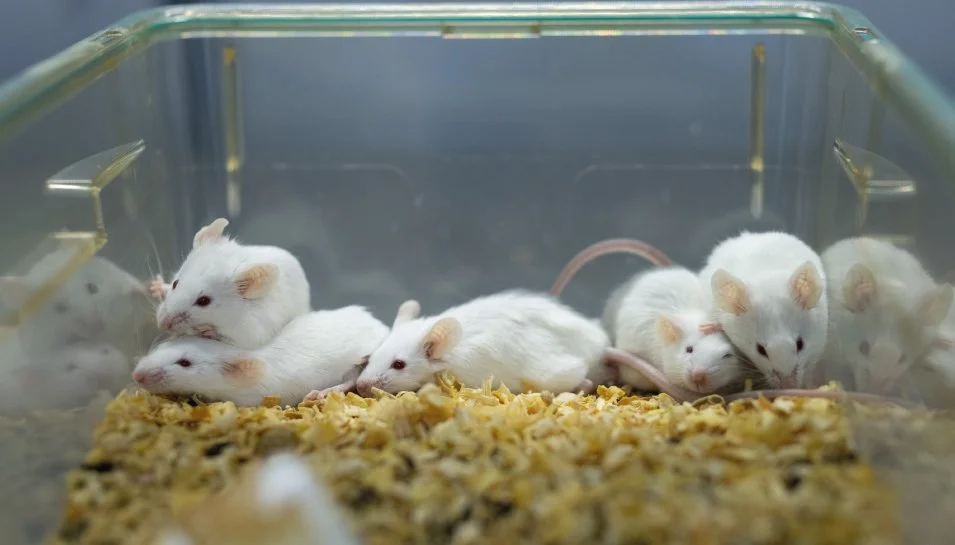
Image by We Animals & Te Protejo
The Context of Motherhood in the Laboratory
In laboratory settings, female rats do not experience motherhood under conditions comparable to those of their natural habitat. In animal facilities and research laboratories, controlled breeding, artificial insemination, and early separation of the offspring are commonly used, depending on the experimental objectives.
Various studies have indicated that factors such as standardized environments, the absence of natural stimuli, and separation from offspring can influence maternal behavior, leading to stress responses or changes in caregiving behaviors. These conditions can also affect variables relevant to the research, a factor that has been taken into account in the analysis of scientific results.
Under natural conditions, rats exhibit social dynamics in which other individuals participate in caregiving, which has been associated with a reduced stress response and improved development of the young. In contrast, in laboratory settings, these interactions are often limited, which can influence behavior and development during the early stages of life.
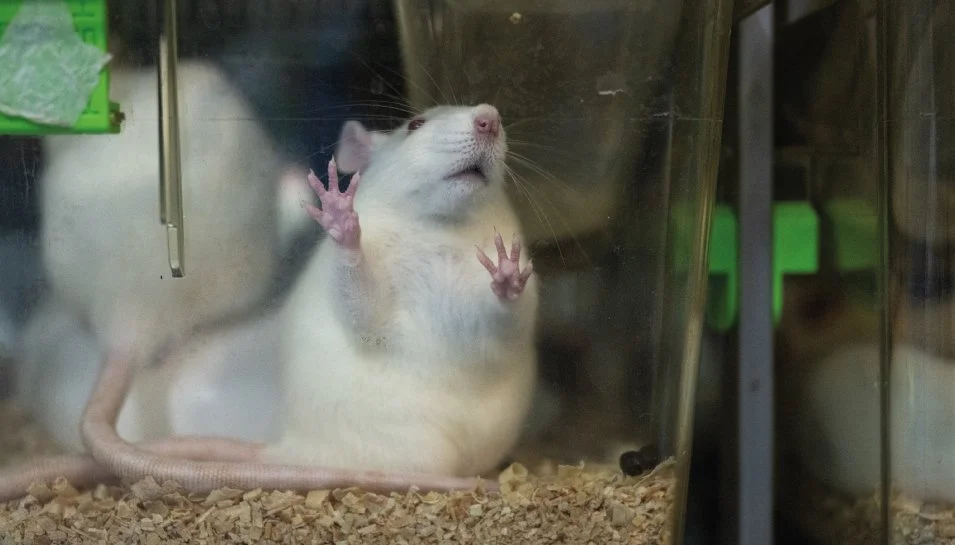
Image by We Animals & Te Protejo
Understanding these behaviors allows us to broaden our perspective on animals' abilities and needs. Learn more about how they perceive their environment in the article “How Long Is a Minute for an Animal?"