More than 180 brands lose PETA's Cruelty-Free certification in Latin America
On August 7, 2025, People for the Ethical Treatment of Animals (PETA) announced a change to its international “Beauty Without Bunnies” certification program. As a result of this update, only brands operating in the United States, Canada, Germany, or India will be eligible for this seal, meaning that more than 180 brands in Latin America will lose the organization’s endorsement.
According to PETA, this measure is in response to European Union regulatory requirements, particularly the REACH Regulation (Registration, Evaluation, Authorization, and Restriction of Chemicals), which allows for animal testing of certain chemical ingredients. According to the organization, this could result in some cosmetics companies being linked to animal testing practices, which led to the restriction of the program’s global scope.

Image courtesy of PETA
The Impact on Latin America
The decision directly impacts the regional market, which is projected to generate more than US$48 billion in revenue by 2025. Specifically, 14% of brands in Chile, 58% in Brazil, 12% in Mexico, 30% in Argentina, 11% in Peru, and 19% in Colombia will lose their certification. In total, 64% of certified brands in Latin America will be removed from PETA’s cruelty-free lists.
“As an organization, we have been working for more than 13 years to achieve a cruelty-free cosmetics industry in Latin America. In this regard, we recognize the commitment and effort that local cosmetics brands have made to develop processes free of animal testing. Therefore, the fact that more than 180 brands in the region have been removed from this organization’s list strikes us as a substantial change within the regional market that could undermine the industry’s efforts,” said Camila Cortínez, founder and executive director of Te Protejo.
The rise of conscious consumption in the region has been key to the growing popularity of cruelty-free cosmetics. In Chile, for example, 68% of people look for the "cruelty-free" label before making a purchase, and 76% consider it very important that products be labeled as cruelty-free, vegan, or natural.
This trend is mirrored in other countries in the region. In Mexico, 71% of the population supports the law banning animal testing for cosmetics. In Brazil, 73% of people are publicly calling for such a law, while in Peru, 71% oppose animal testing in this industry.
Progress is already being made on the regulatory front in various countries throughout the region. Chile, Mexico, Brazil, Colombia, Guatemala, Ecuador, and Panama have banned animal testing for cosmetics. However, challenges remain, as of the 33 countries that make up Latin America, only three (Mexico, Brazil, and Uruguay) have a specific regulatory framework governing the use of animals in research.
Image by Te Protejo
A regional alternative
Given this situation, having reliable certifications is essential. Te Protejo, an organization with more than 13 years of experience promoting cruelty-free cosmetics in Latin America, offers a certification program tailored to the regional context, ensuring international validity and reach. Since 2013, more than 190 brands have gone through this process, which includes document review, supplier declarations, and internal audits.
“Our certification process has been in place since 2013. It was created to address the realities of the Latin American cosmetics industry, with high standards of rigor to ensure that a brand is truly free of animal testing,” added Cortínez.
In light of recent global changes, Te Protejo has made a transition plan available that is in effect through October 31. This program aims to support companies that wish to reaffirm their commitment to an ethical, cruelty-free industry by providing them with a safe, accessible alternative that aligns with international standards. Participating companies will also gain visibility on the organization’s cruelty-free lists, which highlight brands with a presence in Argentina, Brazil, Chile, Colombia, Mexico, and Peru.
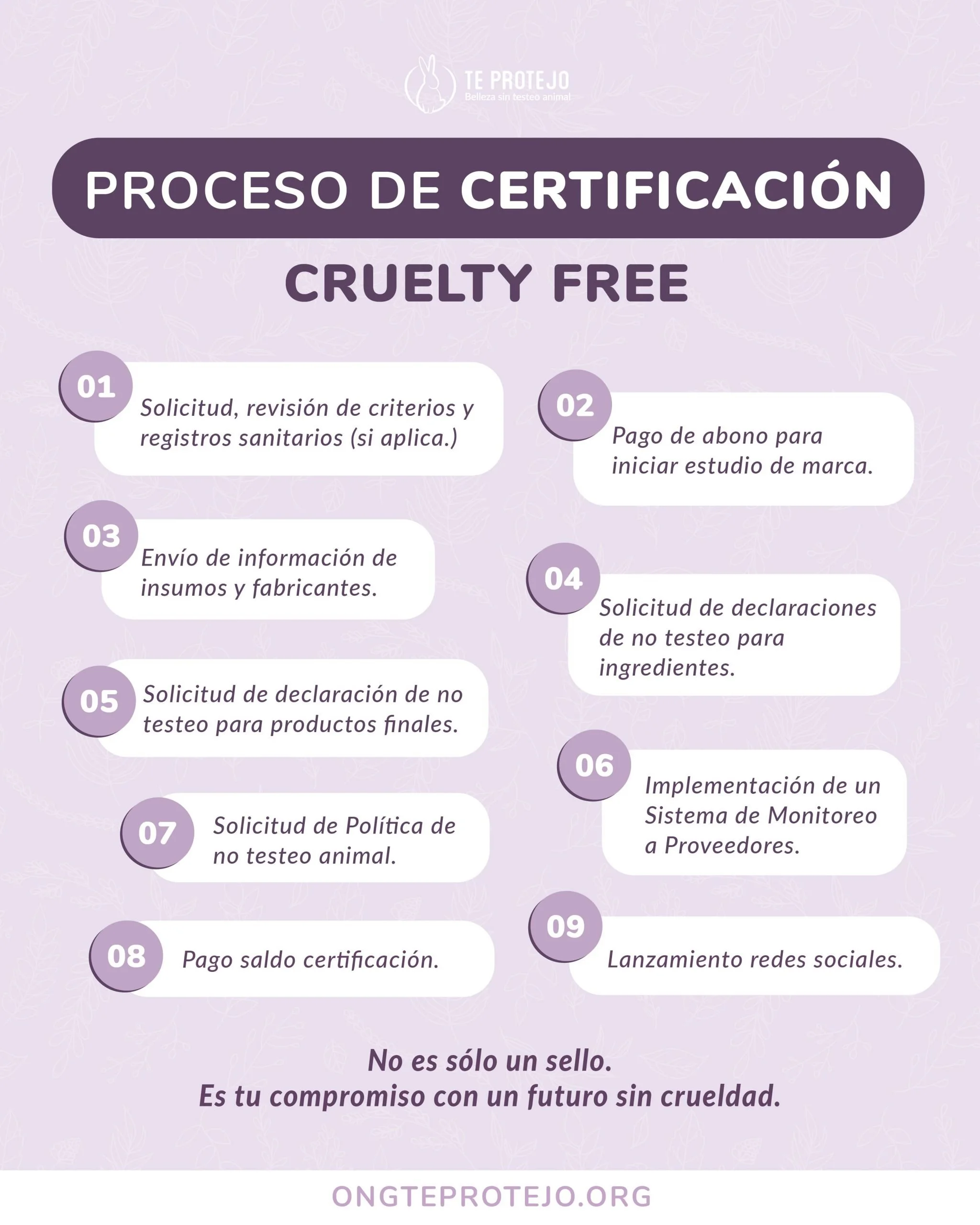
Image by Te Protejo
If you represent a brand interested in obtaining certification or learning more about the process, you can visit ongteprotejo.org or email certificaciones@ongteprotejo.org directly.