2025 Presidential Campaign Pledges: Key Points for Regulating the Use of Animals in Research
In the context of the 2025 primary elections in Chile, Te Protejo developed and presented a series of proposals aimed at the presidential candidates, with the goal of advancing the regulation of the use of animals in research.
As an organization, Te Protejo has spearheaded initiatives aimed at transforming various industries through the development of more ethical and sustainable policies. Within this framework, it has also advocated for ending the use of animals in research, promoting the adoption of new technologies and scientific approaches that will enable progress toward this goal.
In this context, and in line with its mission, the organization reached out to the presidential candidates in the 2025 primary elections with the goal of presenting its vision for moving toward a more ethical country, incorporating animal protection, bioethics, and the development of guidelines to regulate the use of animals in research.
What we aim to include in a presidential program
Regulations under Law 21,646
Law 21,646, which prohibits animal testing in the manufacture of cosmetic products, as well as the sale, import, and introduction into the domestic market of products or ingredients tested on animals, was passed by the National Congress in late 2023 and published in the Official Gazette in January 2024. Following the established period for its entry into force, the law took effect on January 27, 2025.
This law originated from the motions in Bulletin No. 13,966-11, developed with the organization’s support, and incorporated into Bulletins No. 14,180-11 and No. 14,193-11. The bill, introduced in December 2020, was approved with broad support in Congress, marking a significant step forward in the regulation of animal experimentation in the country.
However, the regulations associated with this law have yet to be finalized. In this context, it is considered a priority for the incoming administration to make progress on enacting these regulations during its first year in office, in order to ensure their proper implementation.
Funding for the Animal Bioethics Committee
The Animal Bioethics Committee is the body responsible for establishing the guidelines governing experiments on live animals in Chile, in accordance with Law 20.380. Its functions include proposing guidelines, resolving inquiries, and coordinating with various institutions involved in this field.
This committee is composed of representatives from academia, the scientific community, institutions, and civil society, including the Council of Rectors of Chilean Universities, the Institute of Public Health, the Agricultural Research Institute, the Ministry of Science, the College of Veterinary Medicine, and animal welfare organizations, whose members are appointed for three-year terms.
The committee began meeting in 2018, several years after the law was enacted, and has continued to operate in successive terms. In 2024, the organization was elected to represent animal protection organizations within this body.
However, Law 20,380 does not provide for a specific budget allocation for the operation of the Animal Bioethics Committee, nor does it establish that it reports directly to a ministry. In this context, a priority is to make progress on its funding and institutional ties, with the aim of strengthening its operations and scope.

Image by Te Protejo
Publication of the regulations on experimentation on live animals
Law 20,380 stipulates that the Animal Bioethics Committee must establish the guidelines governing experiments on live animals. However, these regulations have not yet been published.
Although the committee has been established, limitations remain due to a lack of funding and appropriate platforms to carry out processes such as public consultation, as well as to ensure transparency and the subsequent publication of the regulations in the Official Gazette.
This situation is particularly significant given that, more than a decade after the law was enacted, there are still no specific regulations that comprehensively govern the use of live animals in research. In practice, this means that its implementation depends largely on institutional criteria or international standards associated with funding processes.
In this context, a top priority is to move forward with the publication of the regulations on experimentation on live animals, in order to establish a clear and uniform framework for their regulation in the country.

Image by Depositphotos
Educational Reform on Animal Welfare in Science Programs
While Law 20,380 prohibits the use of animals in elementary and secondary education, it does not specifically regulate their use in higher education, particularly in training contexts within scientific degree programs. In the university setting, some institutions allow for conscientious objection to these practices, but this option does not always guarantee access to alternative methods validated by the scientific community, which creates tensions between curricular requirements and students’ right to act in accordance with their ethical principles.
Added to this is the limited inclusion of bioethics and animal welfare content in curricula, which restricts education in these areas. In this context, a priority measure is to advance the effective recognition of conscientious objection in higher education, as well as to strengthen the inclusion of this content in academic training.

Image by Depositphotos
Promoting the development and adoption of alternative methods to the use of animals in research
The review of the National Policy on Science, Technology, Knowledge, and Innovation did not identify any references to the development or promotion of alternative methods to the use of animals, nor any specific commitments to advance this transition. Similarly, the guidelines for calls for proposals available on the ANID website do not require applicants to justify the absence of these methods or to undergo a prior evaluation of them; this decision is left to the ethics committees of each institution. This is significant given that Law 20.380 remains the primary national regulation governing this matter.
With regard to public funding for science, while significant resources are allocated to research and development, there is no specific line item dedicated to the ethical use of animals or the promotion of alternative methods. In this context, a priority measure is to promote a public policy that fosters the development and adoption of alternative methodologies—also known as NAMs—thereby strengthening scientific and bioethical standards in the country.
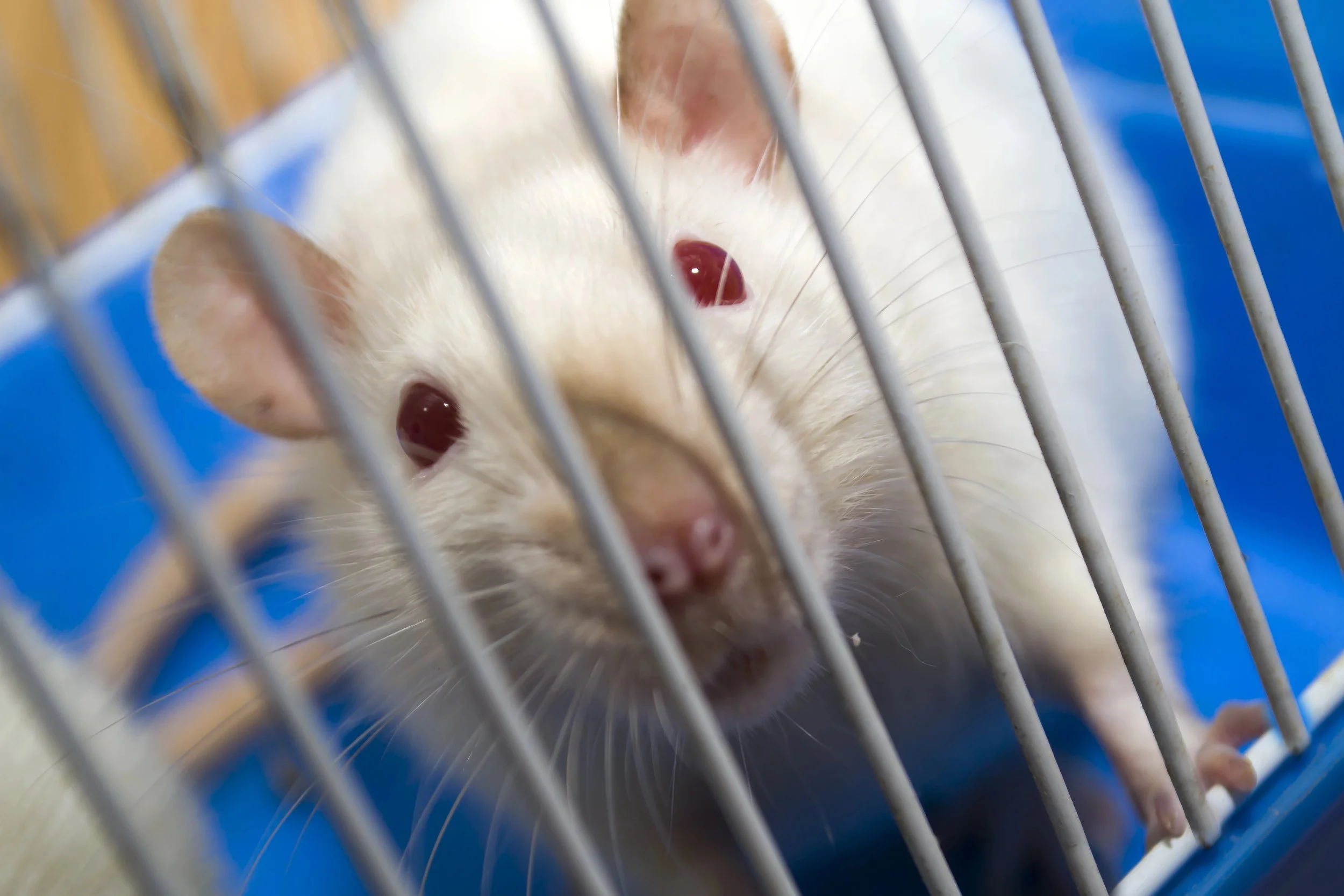
Image by Depositphotos
In this context, the organization reached out to the candidates in the 2025 presidential primaries to present these proposals and succeeded in arranging opportunities for dialogue. However, these measures were not incorporated into the presidential platforms made available during that process.
Making progress in regulating the use of animals in research and in adopting alternative methods is a key challenge for the country’s scientific and ethical development. Understanding the scope of the regulations already in force allows us to assess both the progress made and the gaps that still exist in this area, as well as the challenges associated with their implementation and enforcement in Chile.