Chile Bans Animal Testing for the Cosmetics Industry
Bill 13.966-11, sponsored by the NGOs Te Protejo and Humane World for Animals, was unanimously approved by the Senate on December 20, 2023, marking a milestone for the country and positioning it among the leaders in Latin America in making progress on this issue.
After years of campaigning and advocacy, the bill seeking to ban animal testing for cosmetics, as well as the importation of products and ingredients tested on animals, was approved in a plenary session of the Senate. The vote, presided over by Juan Antonio Coloma, resulted in 27 votes in favor, none against, and one abstention. With this legislative advance, the bill moved on to the Chamber of Deputies as part of the process leading to its eventual enactment.
The initiative, spearheaded by Te Protejo and Humane World for Animals—the organization behind the stop-motion animated short film #SaveRalph, which surpassed 150 million views globally and generated more than 865 million associated views on TikTok—received widespread support. Among those offering support were the national cosmetics industry, health authorities, other organizations, and civil society, which gathered more than 300,000 signatures.
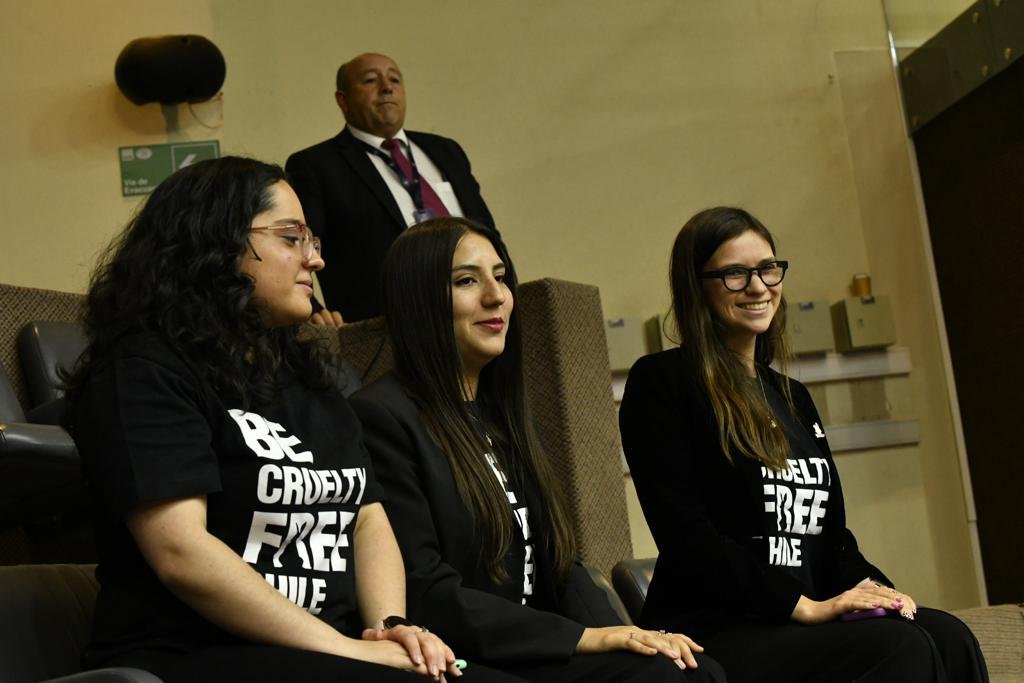
The "Te Protejo" Team at the conference
Nicole Valdebenito, Advocacy Director at the NGO Te Protejo, stated: “This progress represents a milestone for our organization and for the protection of animals in Chile, as it is the third project approved for their benefit in recent years. This initiative helps advance efforts to reduce the use of animals in cosmetic testing by promoting methods that are now more modern and do not require the use of living beings.”
The bill, which was unanimously approved by the Chamber of Deputies in December 2021 and subsequently by the Senate Health Committee in November 2023, prohibits the use of animals in safety and efficacy testing of cosmetic, hygiene, and personal fragrance products, including all their ingredients and formulations. It also prohibits the sale, marketing, importation, and introduction into the domestic market of these products when their ingredients, combinations, or final formulations have been tested on animals after the law takes effect.

Senator Luisa Castro Supports the Bill - Image by Te Protejo
Senator Juan Luis Castro, chair of the Health Committee, stated: “This is a historic step. Thanks to the support of Te Protejo, we are making progress in animal protection by establishing that cosmetic testing on animals in Chile is a practice that must become a thing of the past, in line with today’s global standards.”
Internationally, the project was supported by AFSA (Animal-Free Safety Assessment Collaboration), an initiative of Humane World for Animals that brings together corporate leaders and nonprofit organizations—including companies such as Unilever, P&G, L’Oréal, Avon, and Lush—along with research centers focused on alternative methods.
Daniela Benavides Sánchez, director of Humane World for Animals in Chile, stated: “Thanks to the commitment of consumers, brands, and authorities in various countries, animal testing for cosmetics has been banned in dozens of markets worldwide. HSI and its partners have helped drive these advances in countries such as Brazil, Mexico, Canada, India, South Korea, and Australia. Chile’s inclusion in this group represents a significant step toward establishing more ethical standards in the industry.”
Currently, the ban on animal testing for cosmetics has spread globally, with dozens of countries having adopted such legislation, including leading nations such as India, South Korea, Mexico, and Australia, among others. This progress reflects a growing trend toward more ethical standards and the use of alternative methods in the industry.
In this context, Chile’s progress is part of an ongoing international movement driven by both scientific evidence and an increasingly aware public.
To learn more about this initiative, you can watch the short film *Save Ralph*, available on Te Protejo.